Buy not enough and you'll get stick for weeks to come.
Buy too much and you've shelled out good money for snags that no one touches.
Solar batteries work in a similar way.
Go too small, and you'll be out of power before you've even finished dinner, right back to buying grid electricity when you shouldn't have to.
Go too big, and you've paid for storage that'll mostly sit there doing nothing, making it a shiny expensive trophy.
So, the real question isn't should you get a solar battery.
Instead, “What size solar battery do I need for ‘just right’?”
It's not about showing off the biggest battery on the block.
More about knowing exactly how far you need to go.
So, in the next few minutes let's figure out how to size your solar battery the smart way to ensure you get the best bang for buck.
What Does "Battery Size" Actually Mean?
Explore Current Solar Battery Rebate Offers in 30 Seconds
30 secs · Free · No obligationWhen someone says they've got a 10 kWh battery, they're talking about its capacity which is how much energy it can store.
So it comes as no surprise this this number is known as the battery storage capacity.
Think of it like a car's fuel tank: the bigger it is, the further it'll take you before refilling.
A 10 kWh battery can deliver 10 kilowatt hours of electricity before it's empty.
However, the usable battery capacity may be less than the total rated capacity, since some energy is reserved to protect battery health and longevity.
Don't be fooled though, capacity isn't the same as power output.
Capacity is the total storage.
Output is how much can be delivered at once.
Fortunately, most modern home batteries will handle your standard household loads without breaking a sweat.
Why Getting the Size Right Matters
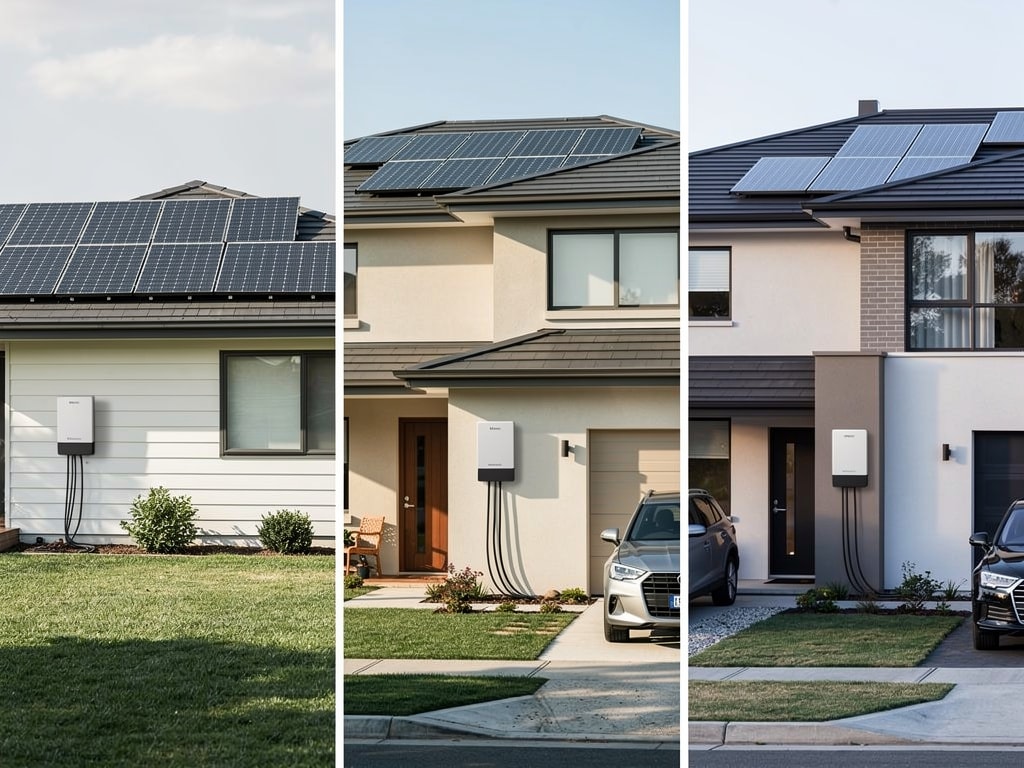
Getting your solar battery size right isn't some fancy tech puzzle.
It's just about making sure your system actually does what you bought it to do.
Nail the right size, though, and things just work.
You'll use more of your own solar power instead of handing it back to the grid for loose change.
Your energy bills start trimming themselves down, and you've got enough stored power to ride out a blackout without breaking stride.
Proper sizing keeps your system efficient, your wallet happier, and your house ticking along, exactly how it should.
How to Calculate Your Home Energy Usage in kWh

Step 1: Understand How Much Energy You Actually Use
Your electricity bill is your roadmap.
It'll show your daily energy consumption which is usually somewhere between 10 - 30 kWh per day for most Aussie households.
The table below shows typical household energy needs and the corresponding home battery size required to cover evening use.
But remember, solar batteries really shine after sunset, so the important part is how much you use at night.
Here's a rough guide:
Add 20-25% for seasonal changes because air-con in summer and heating in winter uses up its fair share of juice.
Understanding your specific energy needs is crucial for choosing the right home battery size.
So, it's important to carefully assess your current and future energy needs to ensure your home battery system is efficient and meets your household's requirements.
If that already sounds like a headache then after we've worked out your exact rebate, the experts can match the battery size for you below.
Find Out Your Battery Rebate Amount & Get Expert Help
30 secs · Free · No obligationStep 2: Match Your Battery to Your Solar System
When considering what size solar battery you need, it's important to look at your complete solar energy system, which includes both your solar panel system and your battery system.
Your battery can't store what your solar panels don't produce, so the energy generation capacity of your solar panels directly affects how much storage your battery system should have.
If you've got a small solar panel setup, going for a monster battery won't get you far.
Here's a quick rule of thumb:
That balance makes sure your battery fills up daily, avoiding wasted solar or idle capacity.
If you're integrating battery storage with an existing system, make sure your new battery system is compatible with your current solar and battery system setup.
Compatibility and proper integration are key for efficient performance and future upgrades.
Step 3: How (and When) You Use Power Matters
Every home has its rhythm, and understanding your usage patterns is key to determining what size solar battery you need.
Maybe you're home all day and run appliances while the sun's up.
In that case, you're already using most of your solar directly and don't need a huge battery.
But if your house wakes up at 5 p.m., the story's different.
Ovens pre-heat, air-con kicks in, TVs glowing…that's when storage capacity pays off.
You'll benefit from a bigger battery if you:
Run heating or cooling after dark
Cook with electric appliances in the evening
Have multiple entertainment devices or pool systems running overnight
Charge an EV from home
It's not just how much power you use; it's when you use it.
Calculate Your Usage With Experts Here
30 secs · Free · No obligationThe Most Common Solar Battery Sizes in Australia
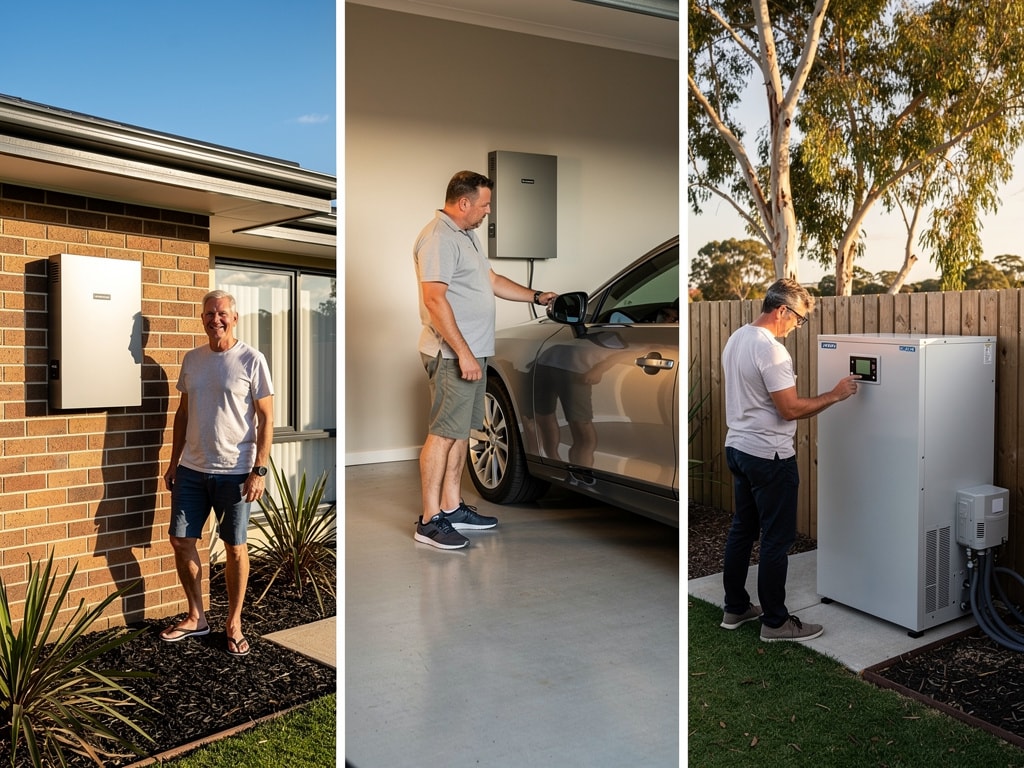
Here's what most Aussie homeowners are installing and why:
*Approximate installed costs as of early 2025. Prices vary by brand, region, and setup.
Do You Want Backup Power Too?
If you live somewhere that loses power every time a storm blows through, you'll want to check if your chosen battery supports backup functionality.
Not every battery does and not every inverter can manage it either.
If you only want to keep the fridge, lights, and Wi-Fi alive during an outage, a 10-13.5 kWh setup usually covers it.
But if you expect to run your whole house overnight in a blackout, aim closer to 15 kWh or more.
Think of it as cheap insurance against flickering lights and warm milk.
Should You Oversize Your Battery?
It's tempting to future-proof everything. But don't overdo it.
If you're planning to buy an EV, install an electric heater, or spend more time working from home, upsizing slightly is smart.
But doubling capacity “just in case” is a different story.
A battery that's too large will take forever to charge, and your payback period will stretch like a rubber band in summer.
When sizing your battery, also consider your backup needs during bad weather, as periods of low sunlight and high energy usage can impact system performance.
The trick is sizing for the next ten years, not your distant dream setup.
Modular solutions offer future scalability, so you can expand your battery system as your needs grow.
Stay practical and your return on investment will thank you.
Choose Solar Incentives for Clear Battery Sizing Guidance
At the end of the day, sizing a solar battery isn't about chasing the biggest specs or latest buzzwords.
It's about finding the battery that fits your lifestyle, giving you just enough to keep your lights bright, your fridge cold, and your bills under control.
A well-sized battery works hard quietly in the background, day in, day out. Not too small to run dry, not too big to waste your money.
This year the battery rebate program required specific usable battery capacity.
Selecting a battery with the correct usable capacity not only ensures your system runs efficiently but also helps you qualify for valuable incentives, making the most of available rebates.
And the best part?
You don't need to guess.
We can help secure the maximum available rebates in under 30 seconds and then the experts can help check your ideal solar battery size so there's no guessing.
It's free, simple, and importantly sales-pitch-free.
Because why sell your sunshine for cents when you can store it where it matters, right at home.
Check Your Available Rebates Now
30 secs · Free · No obligationFrequently asked questions

Jerome Trimboli
Jerome has over 2 years of experience in the renewable energy sector. Australian born and raised, he takes pride in advancing sustainable energy solutions to benefit both the environment and local communities. In his spare time, Jerome enjoys watching Aussie rules, cricket, soccer and basketball, as well as travelling across the world to parts unknown.