
20kW Solar System: Price, Output & Suitability Guide

Jerome Trimboli
Associate Editor, Renewable Energy
5 minutes read · 11th February 2026
When people talk about solar there’s a magic number that keeps popping up…
The ‘20 kW’ solar system.
And it might sound like good advice.
Bigger the system you have, the better the savings will be, right…
But IS bigger, always better?
And does more power output equal more savings?
Let’s take a straight-up look at what a 20 kW solar system really delivers, from
price and output to whether it actually suits your home and lifestyle.
What’s Actually in a 20 kW Solar System?
Think of it as a big Aussie ute. It’s built for heavy lifting, sure.
But not everyone needs that much grunt day to day.
A typical system sits at around 20,000 watts, usually made up of 40 – 55 panels depending on panel wattage:
- 370 W panels → ~54 panels
- 415 W panels → ~48 panels
- 450 W panels → ~44 panels
In most cases, a 20kW solar system will require between 55 to 60 solar panels, depending on the wattage of the panels used.
The bigger the wattage, the fewer panels needed.
Handy if your roof’s full of antennas, skylights, or that gum tree the neighbour still hasn’t trimmed.
But if you need more this is the difference in whether your system hums along quietly for decades…
Or spends its weekends tripping switches.
How Much Does a 20 kW Solar System Cost in Australia

Let’s not dance around it.
Price is what everyone wants to know.
Right now, a properly built 20 kW solar system will usually cost in the high teens to low-twenties (around $18,000 to $24,000) after rebates.
Why the gap? Because the devil (and the dollars) hide in the details:
- Premium panels and quality inverters cost more but last longer
- Roof access, tilt, and any structural or switchboard work
- Local labour rates and grid/connection requirements
- Government incentives (the federal STC rebate varies by postcode zone and installation date)
The federal STC rebate alone can knock thousands off the top, and that’s before any state-based programs kick in
(if available).
In 2026, owners can also leverage the federal Small-scale Renewable Energy Scheme (SRES) for upfront discounts via Small-scale Technology Certificates (STCs).
On the flip side, adding battery storage to your 20kW solar system can increase the overall system cost.
Of course, it may be tempting to cut corners just to save a bit of money short term.
But the cheapest quotes are often the most expensive mistakes.
Skimping out on design or components will mean you’ll lose more money than you ever saved upfront.
How Much Energy Does a 20 kW Solar System Produce Daily?
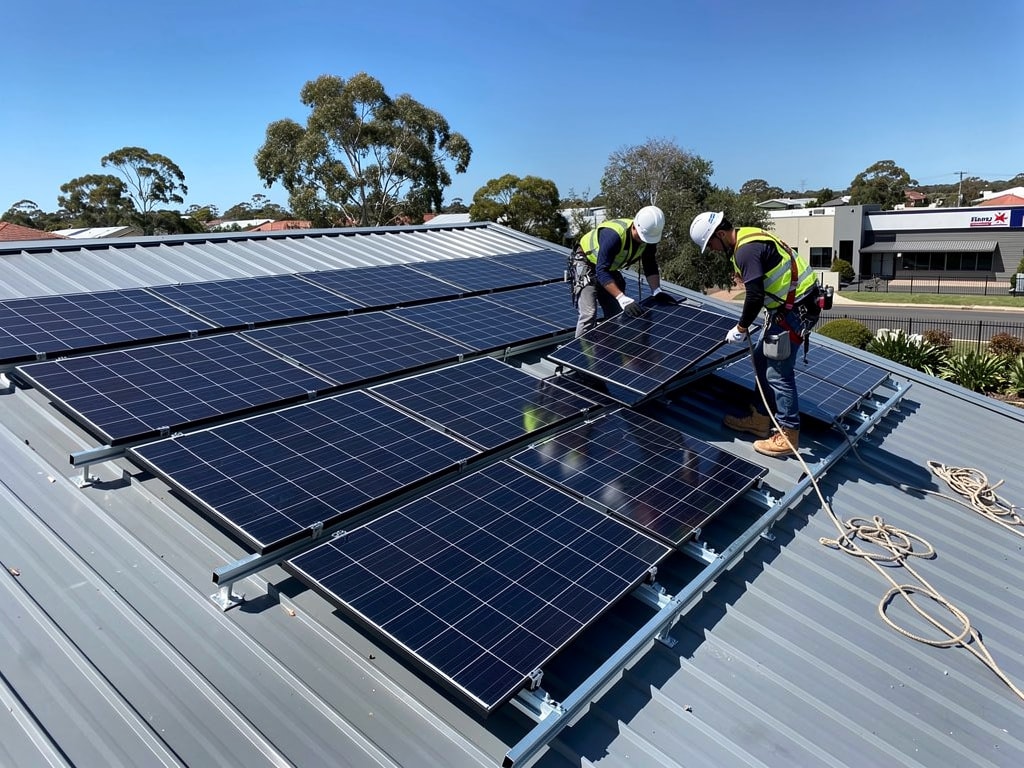
On Australian roofs, a 20kW solar system typically produces power daily in the range of 70–90 kWh per day, depending on location, panel orientation, and weather conditions.
The power output of your system will vary by city, with sunnier locations delivering higher energy generation.
| City | Average Daily Output (kWh) | Sunlight Hours Per Day (avg) | Payback (approx) |
|---|---|---|---|
| Brisbane, QLD | 84 kWh | 5.1 hrs sun per day | 5 – 6 years |
| Perth, WA Fastest payback |
88 kWh | 6.0 hrs | 4 – 5 years |
| Sydney, NSW | 78 kWh | 5.1 hrs | 5 – 6 years |
| Melbourne, VIC | 72 kWh | 4.6 hrs | 6 – 7 years |
| Adelaide, SA | 84 kWh | 5.3 hrs | 5 – 6 years |

FACT A 20 kW solar system can produce roughly 29,000 to 32,000 kWh of electricity per year in good Australian conditions,
depending on your location, roof, and weather.
Even the “lowest” performer in Australia, Melbourne, still cranks enough to handle a big household’s daytime demand like air-cons, pool pumps,
fridges, and every screen in the house running Netflix at once.
Queensland and Western Australia take the gold for output thanks to that endless sunshine.
Pro tip: use high-draw appliances during daylight hours. Every time you run the washing machine at 1 p.m. instead of 8 p.m., you’re using your own power instead of paying retail for it.
How Much Roof Space Do You Need?
Here’s where reality kicks in. A 20 kW system isn’t squeezing onto a townhouse carport.
You’ll need around:
- 100–120 m² for 370 W panels
- 90–110 m² for 415 W panels
- 85–100 m² for 450 W panels
North-facing roofs get the best bang for buck, but east-/west-facing layouts can still perform brilliantly if your power use peaks morning and afternoon.
And if your roof looks busy with chimneys, vents and solar hot water, then don’t stress.
Tilt frames and creative design often save the day.
One call to an experienced installer can tell you whether a 20 kW solar system actually fits or if something smaller (or smarter) makes more sense.
Is a 20 kW Solar System Right for Your Home?
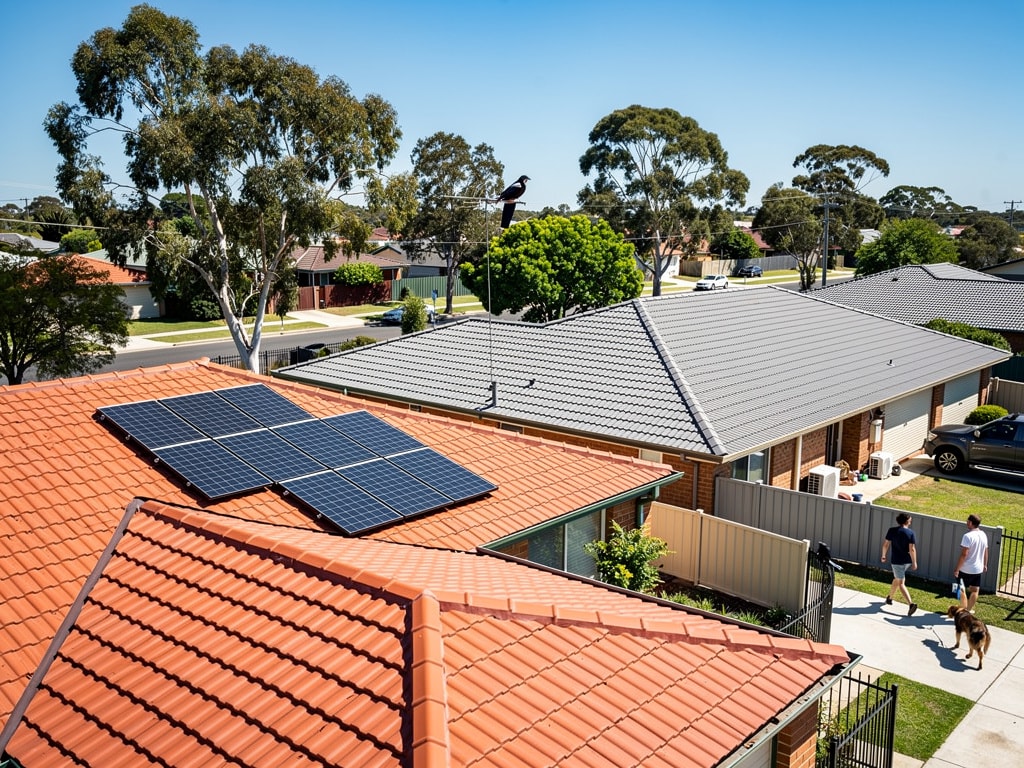
Let’s cut to it. You probably don’t need one unless you:
- Run multiple air-cons, pool equipment or large appliances daily
- Have a big household or a home office that hums all day
- Own EVs or plan to install chargers soon
- Live rural with extra buildings drawing power
- Want a battery down the track
If your electricity use regularly tops 40–50 kWh per day, you’re in the zone.
For smaller households, it’s often better (and cheaper) to not overshoot on system size.
But if you’re routinely fighting off $800 quarterly bills, 20 kW might be the ticket.
Is a 20 kW Solar System Worth It for Small Business?
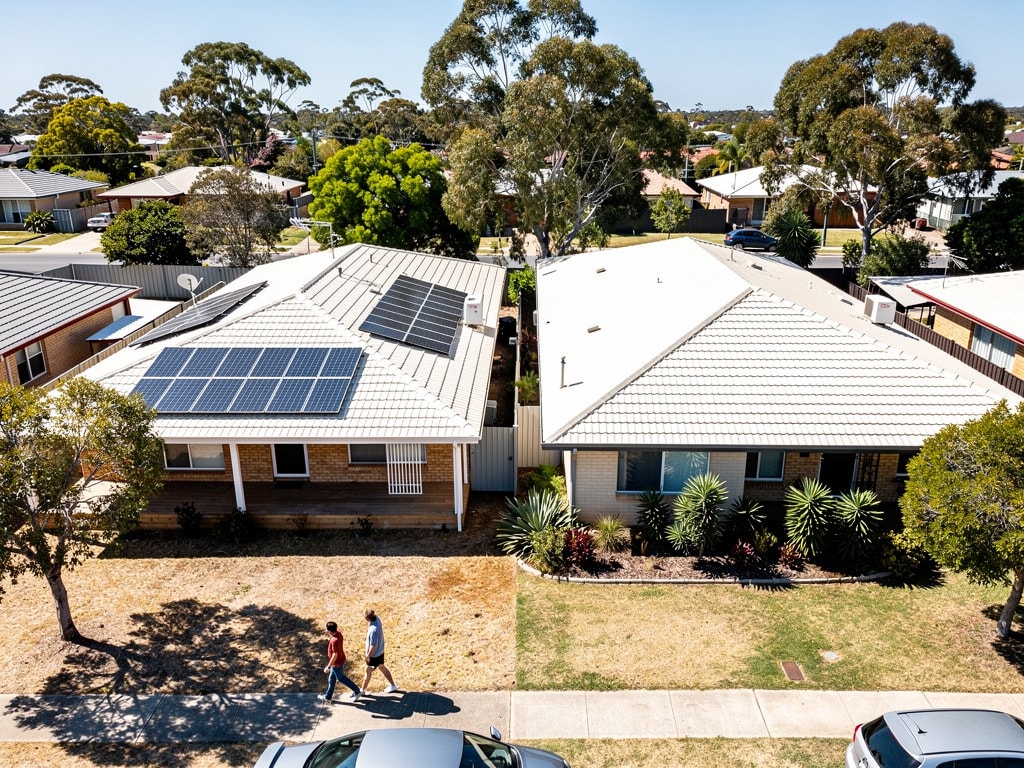
If you run a business that wakes up when the sun does, the answer’s probably a big, bright yes.
Think about it…your lights, machines, computers, fridges, fans, and coffee machine all humming along while the roof above them quietly prints free electricity.
Doesn’t that sound better than watching another invoice roll in from the power company?
A 20 kW solar system is like hiring a silent worker who never takes lunch breaks, never complains about the heat, and turns up every sunny day without fail.
Sure, they knock off when the clouds roll in, but by then you’ve already pocketed most of the day’s savings.
What if every kilowatt your business used came from your own rooftop instead of someone else’s grid?
Imagine your next bill arriving and, for once, not needing to read it twice just to make sure it isn’t a typo.
That’s what smart, small businesses across Australia are discovering: solar doesn’t just trim costs, it gives you breathing room, stability…
And maybe even enough leftover coin to shout the team a Friday lunch.
Once in a while at least.
When the sun’s shining, you’re not paying the grid. You’re paying yourself.
And that’s the kind of business model that never goes out of style in Australia.
Batteries and 20 kW Solar Systems: The Power Couple
Adding a solar battery backup to a 20 kW setup flips the game.
With battery backup, you can store extra energy produced during the day for use at night or during power outages, ensuring uninterrupted power and greater reliability.
Daytime power fuels the battery; evening power comes from your storage, not the grid.
Why it’s tempting:
- Protection during power outages
- Shield from steep peak-time tariffs
- Full use of your system’s maximum energy production
- Next-level energy independence
Homes and small businesses with high night use benefit most.
Solar Incentives help you to decide whether to add one now or prep for later.
Future-proofing your system from day one just makes sense.

Savings Potential of a 20 kW Solar System
Let’s talk payoff.
For properties using about 60 kWh daily, you’re looking at average savings between $4,000 and $7,000 per year depending on grid tariffs and usage patterns.
The amount of money you save will depend on your energy consumption habits and the feed-in tariff agreements you have with your electricity retailer.
Key factors that make your wallet smile:
- Maximise self-consumption – the more you use your own power, the less you pay the retailer
- Feed-in credits still help – lower than in years past, but extra is extra
- Reduce grid reliance – stop donating cheap solar power and buying it back for triple the price
- Protect against bill inflation – electricity prices aren’t trending down anytime soon
The payback period for a 20kW solar system is generally between 3 to 6 years, depending on your energy savings and available rebates.
After that, it’s just free energy rolling in for up to 20 plus years, putting more money back in your pocket.
Not bad for a patch of roof you already own.
Why Australians Choose Solar Incentives
We’re not here to flog panels.
We’re here to make sure you’re not getting sold snake oil disguised as “the latest technology.”
Solar Incentives brings 50 + years of combined experience, accredited installers, and experience backed guidance
to help homeowners and businesses in Australia to install without the fluff.
- Work out realistic energy output for your postcode
- Identify rebates and feed-in credits that actually apply
- Match panel wattage, inverter size & roof design
- Future-proof with battery-ready systems
And best of all? No pushy phone calls. Just experts looking to help.
Finally Thoughts…
A 20 kilowatt solar system can deliver serious energy output and long-term savings when it’s matched to the right property.
It’s generally best suited to large homes, high-usage households and small businesses that use most of their electricity during daylight hours.
These systems do require big roofing areas, good sunlight and careful planning, but when everything lines up, the financial return can be substantial.
The key is understanding how much power you actually use, how your roof is laid out, the amount of sunlight your property receives and how much coin you have.
With guidance from Solar Incentives and trusted partners, you can explore your options, estimate realistic output and move forward with confidence, knowing your system is designed for reliable long-term performance.
The Bottom Line: Time to Give the Power Company the Flick
If you’ve read this far, you’re not window-shopping. You’re serious about cutting bills and taking control of your energy.
A 20 kW solar system isn’t for everyone.
But for the right roof, you’ll find more money in your account every month.
You’ll watch the meter slow to a crawl and wonder why you didn’t do it years earlier.
So why keep feeding the grid when you could be teaming up with the sun?
We’ll help you run the numbers, work out whether it makes sense and, if it does, line you up with trusted Australian installers who actually know their craft.
Your call.
FAQs
How Much Energy Will My 20 kW Solar System Really Generate?
Somewhere between 75–100 kWh per day, depending on your location, panel angles, and seasonal variation.
The three types of 20kW solar systems are on-grid, off-grid, and hybrid systems.
An on-grid solar system allows surplus electricity to be fed back to the grid, providing flexibility to withdraw electricity when needed.
An off-grid solar system provides complete energy independence by relying on batteries instead of the power grid.
A hybrid solar system combines features of both on-grid and off-grid systems, allowing for net metering and battery backup.
Residents in areas with higher sunlight intensity, like Perth, can expect higher daily outputs from a 20kW solar system compared to those in less sunny areas like Melbourne.
How Many Panels Do I Need and Do I Need a Battery Backup?
A 20kW solar system typically consists of 40 to 60 solar panels and requires a 20kW inverter.
The average roof space required for a 20kW solar system ranges from 73m² to 88m² depending on the output and size of each solar panel.
A 20kW solar system requires substantial, unobstructed roof space, measuring roughly 100–140m².
The efficiency of a 20kW solar system can be improved by investing in high-quality components, including batteries and inverters.
Adding a battery backup to a 20kW solar system allows you to store any extra energy produced during the day for use at night or during power outages.
Battery storage systems can charge between 20 – 60 kWh depending on the electricity load profile of a 20kW solar system.
Lithium ion batteries are recommended for their large storage capacity, fast recharge times, and high efficiency in extreme weather conditions.
The number of batteries needed for a 20kW solar system depends on the household or business’s electricity consumption during daylight hours.
Is it Cost-effective for the average home?
The ideal candidates for a 20kW solar system are businesses or residential properties with an average daily energy consumption of 60 kWh to 80 kWh.
A 20kW solar system is a high-capacity, commercial-grade renewable energy system suitable for properties with significant daily energy demands.
A 20kW solar system is a viable option for residential properties as energy dependency increases, especially with the rise of Electric Vehicles (EVs).
To determine if a 20kW solar system is right for you, you should assess your average daily electricity consumption.
What Affects Installation and Maintenance Costs?
Roof type, accessibility, inverter setup, design complexity and whether you add a battery.
The installation of a 20kW solar system typically takes 1 to 2 days, depending on the complexity of the installation.
Maintenance for a 20kW solar system is low, but annual or biennial servicing is recommended, with estimated inspection costs ranging from $480 to $900.
Can Small Businesses Benefit?
Absolutely. Businesses that operate mostly during daylight hours use solar directly when it’s produced. It’s practically free energy while you work.
A 20kW system can reach a return on investment (ROI) within 3 to 5 years due to high generation and significant energy savings.
A 20kW solar system can also help lower your carbon footprint by utilising renewable energy from the sun.

Article By
Jerome Trimboli
Jerome has over 2 years of experience in the renewable energy sector. Australian born and raised, he takes pride in advancing sustainable energy solutions to benefit both the environment and local communities.
In his spare time, Jerome is often watching various sports religiously, such as Aussie rules, cricket, soccer and basketball. Jerome loves playing sports like tennis and golf, as well as travelling across the world to parts unknown.