
How Do Solar Panels Work: A Simple Easy Guide for Homeowners in Australia (2026)

Joe White
Contributing Renewables Editor
4min · 4th December 2025
Your neighbour’s got solar panels on their roof. So, you’re wondering how sunlight actually becomes the electricity running their fridge.
Fair question.
Here’s the thing…
The technology might sound complex, but the process is straightforward. The solar panels simply capture the sun’s energy and turn it into power you can use.
No mystery. No magic.
Just proven tech that’s been working on Australian roofs for decades.
But as you’re here for more detail…
We’ll walk you through exactly what happens from the moment sunlight hits your roof to the second your kettle boils.
And as we’ve helped thousands of Australian homeowners understand solar systems without the jargon, you’re in the right place.
How Solar Panels Actually Work (The 60 Second Version)
Step 1) Solar panels contain PV cells that use the photovoltaic effect to turn sunlight into DC electricity.
Step 2) That DC electricity flows down to your solar inverter.
Step 3) The inverter converts that DC electricity into AC electricity, the type your home actually uses.
Step 4) From there, the AC power runs through your switchboard and powers your household appliances.
Anything you don’t use…
Step 5) It either gets sent to the electricity grid or stored in battery storage.
The good news…
Australia’s climate makes this whole process particularly effective. With the stronger the sunlight, the more power you produce.
And as most regions from Brisbane to Perth get enough of the sun’s energy year-round to make solar systems more than worth it.
That reminds me…
To quickly bust a solar ‘myth’.
Yes, even on cloudy days, your solar panels generate electricity.
Bottom line…It works. And it works well.
What Happens When Sunlight Hits Your Roof

In an ideal world your solar panels should face where they’re exposed to direct sunlight most of the day.
In Australia, north-facing roofs get the best results, but east and west-facing installations work well too.
PV Cells React to Sunlight
Inside each panel, PV cells contain silicon cells and semiconductor materials.
When photons from sunlight hit these cells, they knock electrons loose. Those loose electrons create an electrical current.
Specifically, ‘Direct Current’ (DC electricity) is generated right there on your roof.
That electrical current flows continuously as long as sunlight hits the cells.
Once converted by your inverter, this same electrical current powers everything in your home.
This is the photovoltaic effect in action.
The sun’s energy becomes movement. That movement becomes power.
Simple as that.
How Much Electricity Gets Produced
The electricity generated depends on a few things:
- System size (How many solar panels you’ve installed)
- Panel efficiency (How well your panels convert light energy into electrical energy)
- Roof angle and orientation (See above)
- Local weather (We can’t control that I’m afraid)
Queensland, Western Australia, and New South Wales see high power output during summer.
But even in cooler months or when clouds roll in, modern solar panels still produce energy.
As the panels keep working as long as there’s light hitting them.
Temperature and Performance
Strong sunlight means more electricity. But extreme heat can reduce efficiency slightly.
And rightly so, silicon cells have limits.
Quality panels are designed to handle Australian conditions. High temperatures, occasional storms, coastal salt mist in some areas as they’re built for it.
Choosing photovoltaic panels with solid temperature coefficients keeps performance stable year-round.
Which is why homeowners understand which panels actually suit Australian conditions…
Not just which ones sound impressive in a sales pitch.
How Your Solar Inverter Converts DC to AC Power
Once your solar panels generate DC electricity, that power flows down to your solar inverter.
The inverter is one of the most important parts of your solar power system.
Here’s why.
Why You Need an Inverter
Your home can’t run on direct current as that DC electricity needs converting first.
Australian appliances need AC electricity, ‘Alternating Current’.
Your fridge, lights, washing machine, air conditioner because they all need AC power.
The solar inverter’s job is converting that DC electricity into AC electricity your home can actually use.
This conversion happens continuously throughout the day whenever your panels are producing.
Types of Solar Inverters
There are two main types used in Australian homes:
String Inverters:
- Connect all your solar panels in a series
- Most common setup
- Cost-effective for straightforward roof layouts
- One inverter handles the whole system
Microinverters:
- Attach to each individual panel
- Better for roofs with shading issues
- Higher upfront cost but more flexible
- Each panel operates independently
Both deliver reliable AC electricity to your home.
And the right size depends on your roof layout, any shading problems, and your budget.
Sizing Your Inverter Correctly
A properly sized inverter ensures maximum efficiency over time.
Many solar installers recommend an inverter that exceeds your panel capacity.
Because this supports strong performance even as panels age and their output naturally decreases a bit.
But there’s no one-size-fits-all here.
Your roof is different from your neighbour’s.
Your energy consumption patterns are different.
Your budget is different.
So, having an experienced trusted installer take a look and explain what actually matters for your setup makes sense.
Where Your Solar Energy Goes Once It’s Converted
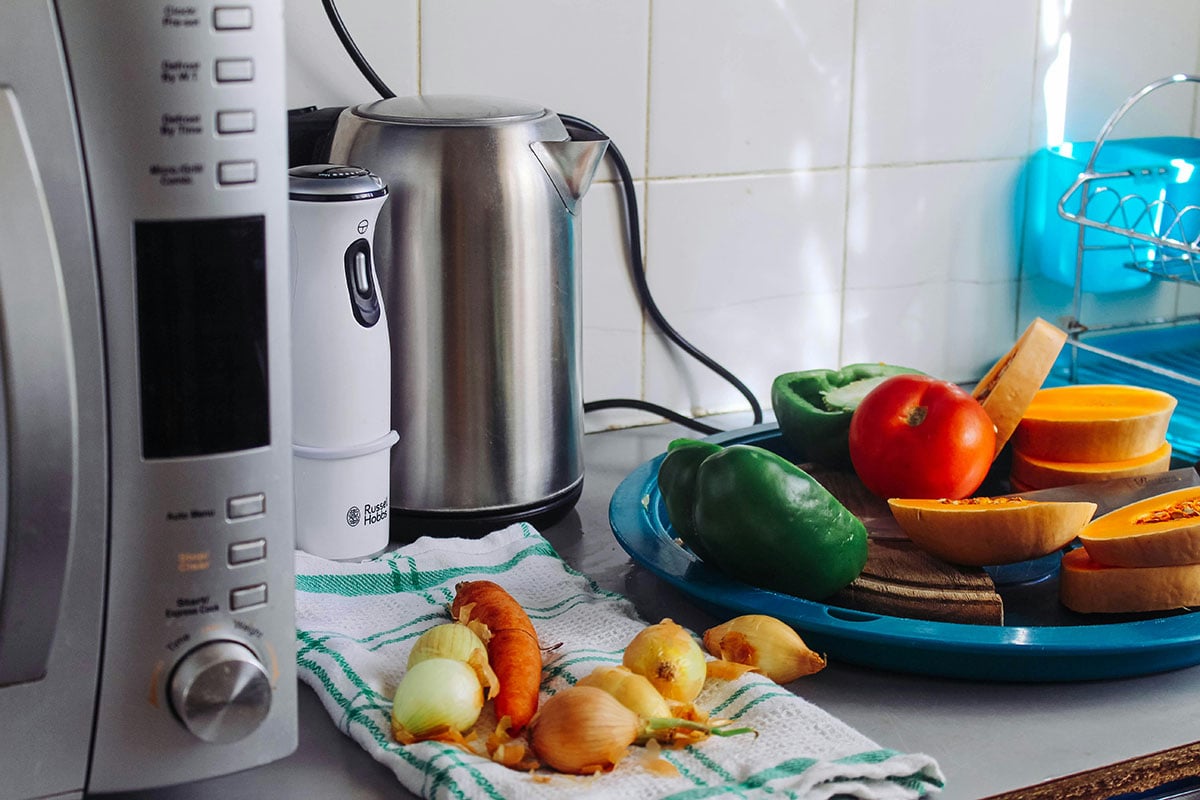
After the inverter converts DC electricity to AC electricity, the power travels to your switchboard.
At this point, it’s ready to run your home appliances.
Your Home Uses Solar Energy First
Everything in your house draws from your solar energy during the day as long as the panels are producing.
Your home automatically prioritises solar power over grid electricity.
The more electricity you use during daylight hours, the more you save on energy costs from your energy retailer.
Makes sense, right?
Which is why timing your energy consumption is key for lower bills.
Such as running appliances during the day maximises your solar energy use.
And heating your hot water during peak sunlight hours instead of at night can cut your power bill significantly.
Because even small changes add up over time.
What Happens to Excess Electricity
If your solar system produces more electricity than your home needs at that moment, that excess electricity doesn’t go to waste.
That excess electricity flows back to the electricity grid.
Your energy retailer credits you for this exported power through a feed-in tariff.
Usually somewhere between 5 and 10 cents per kilowatt-hour, depending on your state and retailer.
Now, feed-in tariff rates have dropped a lot over the years.
Which is why solar batteries and ‘self consumption’ now make more sense.
Storing Power in Solar Batteries
If you’ve installed solar batteries, excess energy gets stored instead of exported.
That stored power sits there until you need it. Typically during the evening when the sun goes down and your panels stop producing.
Battery storage gives you more control over your renewable and excess energy.
You use your own power instead of buying from the grid during peak pricing periods.
And quality solar batteries last years with proper maintenance.
Is Battery Storage Worth It?
Of course, solar batteries add to your upfront costs.
But whether they make financial sense depends on a few things:
- How much excess electricity you currently export
- Your evening energy consumption patterns
- Your electricity retailer’s tariff structure
- Available government rebates in your state
Here at Solar Incentives, we don’t sell batteries. We help you figure out if they suit your household and budget and of course get you the biggest battery rebate possible.
If you’re sitting on the fence about batteries, we can walk you through the math for your specific situation. Click below.
Why Your Home Stays Connected to the Electricity Grid
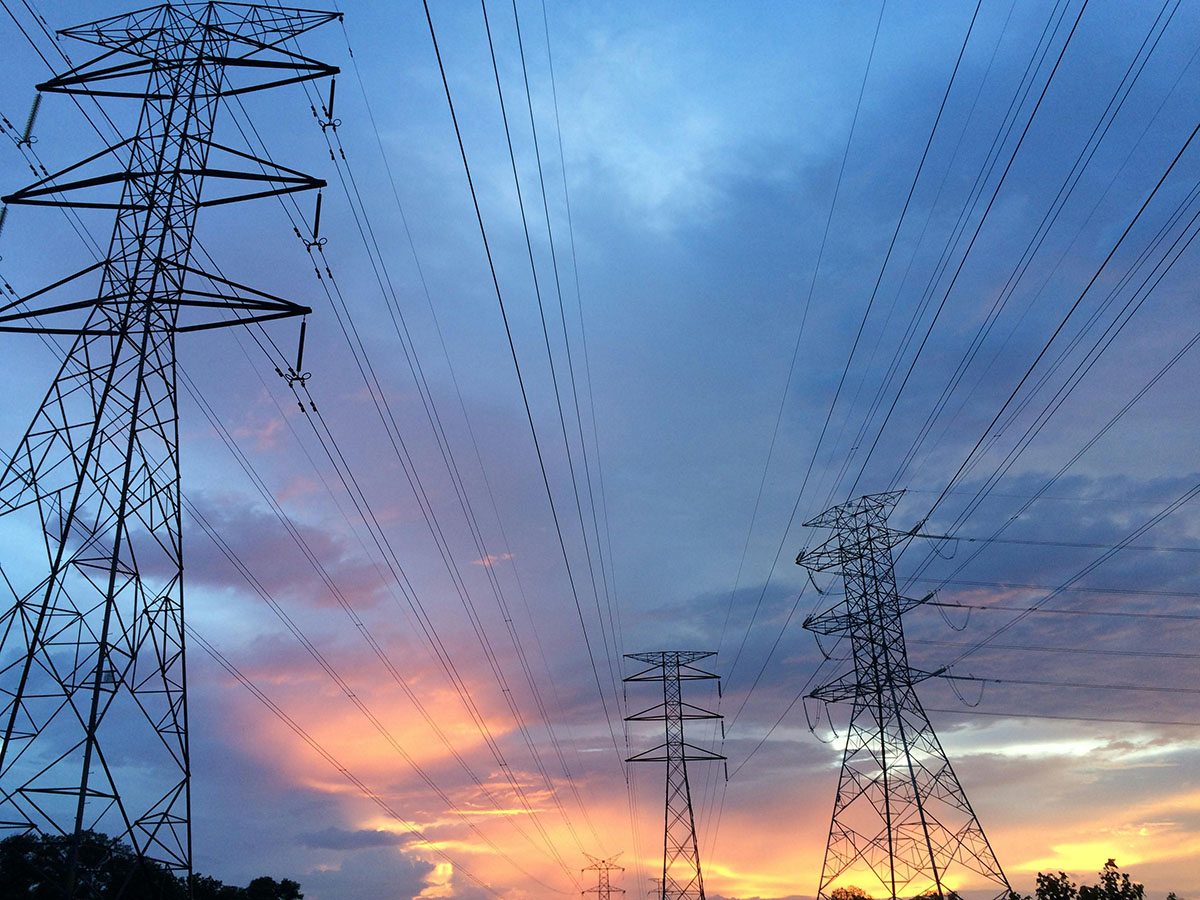
Even with solar panels on your roof, your home stand alone system stays connected to the electricity grid.
This connection means you always have back power, regardless of weather or time of day or whether you have a solar battery or not.
The Grid Supports Your Home at Night
Unfortunately, solar panels only produce electricity when the sun’s out.
At night, production comes to a halt.
But as we mentioned, with battery storage, your home draws power from the grid during evening hours.
And this two-way flow…
Exporting during the day, importing at night is how the best Australian solar systems operate and you get the biggest long term savings.
Finding Better Energy Retailer Plans
The balance between what you export, what you self-consume, and what you import affects your savings.
Different energy retailers offer different feed-in tariffs and usage rates.
Shopping around for a better plan can increase your overall savings.
We help Australian homeowners compare retailers and understand which plans actually suit their solar system size and household usage patterns.
Not all plans are created equal and comparing them is a must.
Seriously on average you can save up to $400 a year just by seeing what’s on offer.
Click here now to compare your plan in 60 seconds.
Why Solar Panels in Australia are a No Brainer…(Usually)
Sunlight
We all know, Australia gets more sunlight than most countries.
From Victoria to Perth, New South Wales to Tasmania most regions see strong solar conditions throughout the year.
This makes solar power systems particularly effective.
And look, beyond the savings, you’re also reducing your carbon footprint. Every kilowatt-hour your panels generate is one less from coal or gas.
Which is one step closer towards a greener future that happens to save you money.
Can’t say fairer than that.
Roof Space and System Sizing
Australian homes typically have enough roof space to install systems that cover most of their daily electricity needs.
A standard 6.6kW solar system fits comfortably on most residential roofs. Larger homes might go up to 10kW or more.
Meaning the more solar panels you install, the more clean energy you’ll need to generate.
Long-Term Financial Benefits
It’s no secret…
Electricity prices keep rising and solar panels lock in decades of lower energy costs.
Most households see payback periods between 3 and 6 years, depending on system size, energy consumption, and electricity rates.
After that payback period, your clean energy is essentially free for the remaining life of your system.
Making it a solid long-term investment for most Australian households.
Government Support Through Rebates
The federal government’s Small-Scale Technology Certificate Program reduces the upfront cost of solar installations.
These government rebates make solar power systems more affordable for Australian homeowners in 2026.
We stay current on available rebates and help homeowners understand exactly what financial support they qualify for.
Rebates change. States update programs.
We keep track so you don’t have to.
What Makes Solar Panels Efficient in Australian Conditions

Not all solar panels perform the same way.
Efficiency ratings, build quality, and heat tolerance all affect how well your system produces electricity over time.
Heat Tolerance Matters
Australian summers get hot. High temperatures can reduce panel efficiency slightly.
Quality modern solar panels are designed to handle this by using materials and construction methods that maintain performance even when your roof hits 60°C or higher.
Which is why it’s important to pick panels with strong temperature coefficients to ensure stable energy production across all seasons.
But your roof isn’t a practice ground.
You want panels that’ll handle whatever Australian weather throws at them.
Durability and Warranties
Your solar panels can sit on your roof for 20 – 25+ years if maintained properly.
They face sun, wind, rain, hail, and everything else our climate dishes out.
Panels from proven manufacturers come with product warranties (typically 10–12 years) and performance warranties (usually up to up to 25 years).
These warranties protect your investment and ensure your panels keep generating electricity at expected levels.
We all know solar panels cut your energy bills by reducing how much grid electricity you need to buy…
So, the longer you can keep them working, the bigger your savings.
Location-Specific Considerations
Coastal areas need panels with protection against salt corrosion.
Inland areas with higher average temperatures benefit from panels with better heat resistance.
Understanding these regional differences helps you select the right solar technology for where you live.
We help connect homeowners with trusted solar installers who understand local conditions and recommend what actually works in your area.
Maintenance and Long-Term Performance
Another solar myth that needs busting…
You won’t be on your roof week after week fixing your panels.
In fact, solar power systems require minimal maintenance and once installed, they mostly run themselves.
(Providing your installer knows what they’re doing.)
Cleaning Solar Panels
Dust, leaves, and bird droppings can reduce efficiency if they build up.
Cleaning solar panels once or twice a year keeps them producing at their best. In most areas, rain does a decent job naturally.
If you’re in a dusty area or under trees, you might need to clean them more often.
Just keep them reasonably clear and they’ll keep working.
Monitoring System Performance
Most modern systems include a monitoring system that tracks energy production.
Which means you can check how much electricity your solar panels generate each day, spot any drops in performance, and ensure everything’s working properly.
And if your production suddenly drops, your monitoring system helps identify the issue quickly.
Sometimes it’s just a cloudy week. Sometimes it’s a loose connection on your solar panels.
Either way, you’ll know.
What Happens During Power Outages
Standard grid-connected solar systems shut down during blackouts.
This is a safety feature that protects utility company workers repairing the grid.
If you want backup power during outages, you need battery storage with specific backup capabilities built in.
Not all solar batteries provide backup power.
If blackout protection matters to you, make sure your solar installer knows this upfront and they’ll fit a battery that does the job.
Ready to Explore Solar for Your Home?
To recap…
Solar technology works by capturing sunlight with PV cells, converting it into DC electricity, then transforming that into AC electricity your home can use.
It’s proven renewable energy technology that is perfectly suited for Australia’s climate.
If you’re considering solar panels for your property, understanding the process is the first step.
The next step is figuring out what system size suits your energy needs, which government rebates you qualify for, and which solar installer can deliver quality work at a fair price.
Here at Solar Incentives, we make this straightforward.
We help Australian homeowners compare options, understand costs, and connect with trusted solar installers across the country.
No obligation. No pushy sales tactics.
Just clear information to help you decide if solar power makes sense for your household.
If you’d like to know what rebates you qualify for, we’re here.
We’ve supported thousands of homeowners through this process.
Now, solar technology delivers long-term savings and energy independence.
But understanding how it works helps you make a confident decision about whether it’s right for you.
Solar Panel FAQs
How do solar panels generate electricity for Australian homes?
Solar panels use PV cells containing silicon cells and semiconductor materials. The photovoltaic effect occurs when light energy hits these cells, creating an electrical current.
This becomes DC electricity, which your solar inverter converts into AC electricity your home can use.
It’s a renewable energy source that works reliably in Australia’s sunny climate, delivering clean power year after year.
How many solar panels does a typical system need?
The number depends on your household energy consumption, how much electricity you want to cover with solar, and how much sunlight your roof receives.
Most Australian homes install between 18 and 26 solar panels (roughly 6–10kW systems). Your power bill history and roof space determine the right system size for your situation.
What affects how much electricity my solar panel system produces?
The electricity generated depends on panel quality, roof angle and orientation, local weather, and how much sunlight your location receives.
Modern solar panels with efficient PV cells and strong semiconductor materials produce more electricity even in less-than-ideal conditions. System size matters too. The more panels mean more power output.
Do solar panels help lower energy costs in Australia?
Yes. A solar panel system reduces energy costs by generating the electricity your home needs during the day.
When your solar panels generate more electricity than you’re using, you either export it for a feed-in tariff credit or store it in solar batteries.
This cuts your power bill significantly. Government rebates also reduce upfront costs, improving your return on investment.
Can solar panels work on cloudy days?
Solar panels still produce electricity on cloudy days, just at reduced levels.
They need light, not necessarily direct sunlight.
Australian homes with solar power systems generate usable power even during overcast weather. Production drops compared to clear sunny days, but it doesn’t stop completely.
What’s the difference between DC electricity and AC electricity?
DC electricity flows in one direction. Your solar panels produce DC electricity.
AC electricity alternates direction many times per second.
Your household appliances need AC electricity to function. That’s why your solar inverter converts the DC electricity generated by your panels into AC power your home can actually use.
Article By
Joe White
Joe has over five years of experience in the renewable energy sector. Based in Australia, he is dedicated to advancing sustainable energy solutions to benefit both the environment and local communities.
In his spare time, Joe loves to surf and take his dog, Mitchy, on road trips to explore the road less traveled.