
How Many Solar Panels Do I Need? Easy Calculator Guide for Australian Homes

Jerome Trimboli
Associate Editor, Renewable Energy
7 minutes read · 20th January 2026
We’ve all been there. You’re having a big catch up with friends or family, and someone starts raving about how solar has “slashed their power bills” .
Now, of course you’ve every right to be skeptical…
So, you ask the obvious question.
“How many solar panels do you actually need?”
Cue the vague hand gestures, half answers, and ‘guesstimations’.
Truth is, most Aussies love the idea of solar panels, but very few people can clearly explain how system sizing actually works.
And fair enough, it’s not something you deal with every day.
But we know one thing for certain: there’s no one-size-fits-all solar system.
What works for a small unit in Newcastle, won’t suit a five-bedroom home in Brisbane with ducted air con, a pool pump, and an EV charger on the way.
And in 2026, with electricity prices still climbing and solar panel technology improving, getting the number of solar panels right matters more than ever.
Get it right and you’ll see meaningful savings on your electricity bill.
Get it wrong and you could end up paying for panels you don’t need, or worse, a system that doesn’t cover enough of your electricity usage.
The good news?
Working out how many solar panels you need isn’t rocket science after we break it down properly.
Or, you can skip it completely and get one of our experts to do it for you, after discovering what rebates you’re eligible for.
What Determines How Many Solar Panels You Need?
Here’s the thing most Aussies don’t realise until they’re knee-deep in quotes from solar installers.
The question “how many solar panels do I need?” isn’t solved by slapping as many solar panels as possible on your roof and calling it a day.
If that were true, we’d all be running larger systems whether we needed them or not and plenty of Aussies would be paying for power they never use.
The real answer sits at the intersection of a few big questions:
- How much electricity does your household actually use?
- How much roof space have you got to play with?
- How much solar power do you realistically want to generate?
- And do you want your solar panel system to cover just today’s needs… or tomorrow’s too?
Let’s unpack it.
Electricity Consumption
Picture a typical week at your place.
Is the air con humming most afternoons?
Is the washing machine doing overtime?
Got a swimming pool that needs filtering?
Or maybe you’re charging an electric vehicle overnight?
All of that feeds into your electricity consumption, and that’s the foundation for working out how many panels you’ll need.
The simplest way to get an accurate estimate?<.p>
Pull out your electricity bill or check your smart meter data.
Look for your usage in kilowatt hours (kWh) because that tells you how much electricity your home uses over time.
As a rough guide, the average home in Australia sits somewhere between 10 and 40 kilowatt hours per day, depending on household size and lifestyle.
That figure is your average daily usage, and it’s gold when sizing a solar system and battery.
While guessing is how people end up with either:
- Not enough solar panels to make a dent in their electricity bill, or
- Way too many solar panels dragging out the payback period.
Panel Wattage
Here’s a scenario we see all the time.
Two homes. Same electricity usage. Same roof size.
One needs more panels, the other doesn’t.
Why?
The reason is their rated capacity.
A 450-watt panel has higher power output than a 370-watt panel. That means fewer panels are needed to generate the same amount of energy across the day.
If your roof is tight, higher wattage panels can help you hit your system size without cramming in many panels or compromising airflow and layout.
Same roof. More power. Smarter use of space.
Roof Space and Orientation
Now let’s talk about your roof, because roof space can be either a blessing or a curse.
Stand out the front of your house and observe:
- Is your roof nice and open, or chopped into awkward sections?
- Is there decent sun exposure, or do trees and neighbouring buildings steal sunlight hours?
- How much roof area is actually usable?
Each panel usually takes up around 1.7 to 2 square metres of square footage.
So when people ask “how much roof space do I need?”, the honest answer is:
It depends how many panels you want and how powerful they are.
A smaller roof doesn’t mean solar is off the table, it just means panel wattage matters more.
Location in Australia
Bit more sun where you live? Lucky you.
That’s free energy waiting to be turned into savings.
If you’re in Queensland, your daylight hours and sunlight hours are longer than someone in Tasmania.
That directly affects energy production.
More sun exposure means:
- Higher production ratio
- More electricity generated per panel
- Fewer panels needed for the same output
So, when someone asks “how much solar power will my system generate?”, the answer always comes back to location and how much sunlight hits your roof each day.
Lifestyle and Future Plans
Let’s be honest, very few Aussie households sit still for long.
Think about how your place looked ten years ago.
Chances are, your electricity usage wasn’t anything like it is today.
Maybe the kids were younger, you weren’t working from home, or that second fridge in the garage didn’t exist yet.

Did you know Australian homes have 3× more devices than just a decade ago.
Fast forward to now.
You might be running the air con through long summer arvos…
…Charging more devices than you can count…
…Or eyeing up an electric vehicle because fuel prices keep doing their thing.
Plenty of households start out thinking, “We’ll never need that much power”… right up until they do.
We see it all the time. A family installs a solar panel system sized perfectly for today’s needs.
Two years later?
Someone’s working from home full-time, ducted heating goes in, or a home business kicks off in the spare room.
Suddenly, their solar system isn’t producing enough power, and they’re back to leaning on the grid.
That’s why allowing for extra panels, even just a couple, can be one of the smartest moves you make.
It’s usually far cheaper to install them upfront than to upgrade later.
That said, going overboard and installing a larger system than you’ll realistically use can slow your payback period.
The sweet spot sits somewhere in the middle:
Enough solar panels for today, with a bit of breathing room for tomorrow.
Step One: Calculate Your Daily Electricity Usage
This is where most people go wrong straight out of the gate.
They’ll say, “We’re pretty average”, but average can mean very different things depending on your lifestyle.
Grab your latest power bill. The first and most important step is to assess your daily electricity consumption.
Look for the number measured in kilowatt-hours (kWh). This tells you how much energy you use each day.
Most Australian households fall within the following ranges:
- Small households: 10 to 15 kWh per day
- Medium households: 15 to 25 kWh per day
- Large households: 25 to 40 kWh per day or more
If your bill provides quarterly usage, divide the total consumption by the number of days in the billing period to calculate your daily average.
Step Two: Decide How Much of Your Electricity Solar Should Cover
Here’s a common pub myth: “You should aim for 100% solar coverage.”
In reality? Not always.
Most Aussie households remain connected to the grid and aim to cover 60–90% of their electricity use with solar power. Why not 100%?
Because midday energy is cheap, but:
- Feed in tariff rates are lower than they used to be
- Export limits cap how much energy you can send back to the grid
- Battery storage adds cost upfront
So rather than chasing perfection, many homeowners choose balance.
For some homes, 70% coverage delivers excellent savings.
For others with higher daytime usage, 90% coverage makes sense. The right answer depends on how you live, not just how much sunlight you get.
Step Three: Understand Solar Panel Wattage
Now let’s talk system size and panel wattage, because this is where roof space really comes into play.
A quick refresher:
- One kilowatt equals 1,000 watts
- Panel wattage tells you how much power each panel can produce under ideal conditions
So if two neighbours both install a 6.6 kW solar system, but one uses 400W panels and the other uses 450W panels, guess who needs fewer panels?
Same system size. Fewer panels. Better use of available roof space.
This matters a lot for homes with limited roof area, awkward roof shapes, or shading.
Higher wattage panels let you generate more electricity without cramming many panels into tight spots.
Step Four: Estimate Solar Energy Production in Your Area
Struggling to figure out how to estimate the solar energy production where you are?
How much solar power your system can generate depends on your location, the number of sunlight hours you receive, and the size of your solar system.
We’ve made it easy for you.
Here is the average daily solar production per kilowatt (kW) of system size:
- Queensland and Northern Australia: 4.5 to 5.5 kWh per kW per day
- New South Wales and Western Australia: 4 to 5 kWh per kW per day
- Victoria and South Australia: 3.5 to 4.5 kWh per kW per day
- Tasmania: 3 to 4 kWh per kW per day
These numbers are your cheat sheet to help convert your electricity consumption into the required solar system size.
Example Solar Panel Calculation
Let’s say you’re in suburban NSW.
You’ve got a family home, air con on for the summer, maybe a pool pump ticking away, and your daily electricity use averages 20 kWh. You decide you want solar to cover 80% of that.
That means you need:
- 16 kWh of solar energy per day
In much of NSW, a well‑installed solar system will typically produce around 4.0 – 4.2 kWh per kW of system size per day over the year.
So to get your 16 kWh/day, you work backwards:
16 ÷ 4.0 ≈ 4.0 kW of solar capacity
16 ÷ 4.2 ≈ 3.8 kW of solar capacity
To keep things simple and make sure you actually hit that 80% target, you’d usually size a touch higher rather than lower.
So, you might aim for a 4.0 kW system.
If you install 400 W panels, that’s:
4.0 kW ÷ 0.4 kW = 10 panels
That’s your number of solar panels.
Not guessed, not rounded up for no reason, just a clean, logical calculation based on real usage and real sunlight hours.
Typical Solar Panel Numbers for Australian Homes
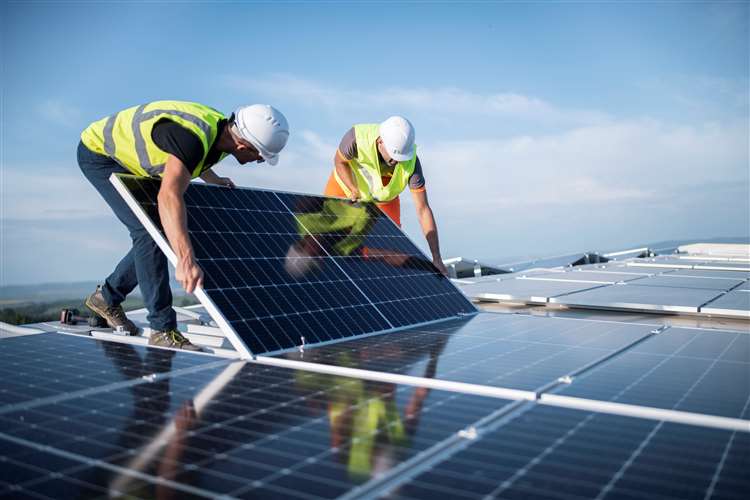
Wondering how many solar panels you might need? Here’s a quick guide based on typical Australian household sizes and usage.
Smaller Homes (1-2 people)
- System size: 4 to 5 kW
- Panels needed: About 10 to 13 panels (using 400W panels).
Medium Family Homes (3-4 people)
- System size: 6.6 kW
- Panels needed: Around 16 to 18 panels (using 370W to 415W panels).
Larger Homes (5+ people)
- System size: 8 to 10 kW
- Panels needed: Roughly 20 to 25 panels, depending on their wattage.
High-Usage or Rural Properties
- System size: 12 to 20 kW
- Panels needed: Between 30 and 55 panels.
Just a heads-up, these numbers are estimates and assume your roof gets plenty of sun with little to no shade.
How Roof Space Affects Panel Numbers?
Roof space is usually the biggest factor when it comes to how many solar panels you can install, which of course you’d expect.
Each panel takes up about 1.7 to 2 square metres of space, so here’s a quick idea of what you’ll need:
- For 10 panels, you’ll need around 20 square metres
- For 20 panels, about 40 square metres
- For 30 panels, roughly 60 square metres
Tight on space? Higher wattage panels can help you get more power without needing more panels.
How Shading Changes Panel Requirements?
Picture this.
You install solar panels, everything looks great…
Until the first summer bill lands and the savings aren’t what you expected.
(Goodbye 2 week holiday in Bali. Hello, a simple weekend at the in-laws holiday home down the coast.)
Turns out the neighbour’s trees throw shade across your roof every afternoon.
Shade is one of the biggest silent killers of solar performance. Even partial shading can knock down your system’s power output.
That’s where solutions like smarter panel layouts, micro-inverters, or even a couple of extra panels can help offset losses.
Then there’s export limits. Many homeowners assume they can export unlimited power back to the grid.
In reality, your grid connection and electricity retailer often cap how much you can send back.
If you’re hitting that ceiling, adding battery storage might make more sense than installing more panels.
Should You Size Panels for Future Energy Use
It’s smart to think ahead.
You might not need an EV charger or pool heater now, but what about 3 years from now?
You may not be working from home now, but what about 3 years from now? Will you need to expand your home office or require better heating and cooling?
Adding a few extra panels upfront is often cheaper than retrofitting later. Just don’t go overboard.
Oversized systems means slower returns if your usage doesn’t actually rise.
Common Mistakes When Calculating Solar Panels
Ready to go solar? Don’t fall into these common traps when calculating how many panels you need.
Many homeowners make the mistake of:
- Guessing their system size without checking past energy bills.
- Skimping on panels to cut costs, only to find they don’t generate enough power.
- Forgetting about roof direction and shade from nearby trees or buildings.
- Overlooking seasonal changes in sunlight and energy use.
- Not planning for the future like buying an electric vehicle or a new appliance.
A quick calculation or professional assessment clears these hurdles in minutes.
Which our experts would be happy to do.
How Panel Quality Affects Panel Numbers?
Here’s a question worth asking:
“Would you rather buy something once and be done with it, or save a bit upfront and replace it sooner?”
Cheap panels can look tempting, especially when you’re staring at the price tag. But they often lose efficiency faster.
Over time, that can mean adding extra panels just to keep up, or living with lower output than you expected.
In the long run, paying a little more upfront often works out cheaper across the lifespan of your solar panel system.
It’s one of those decisions where cutting corners early can cost you later.
Cost Considerations When Choosing Panel Numbers

So, is it always smart to go as big as possible?
Not necessarily, but going too small can hurt just as much.
Adding a couple of extra panels during installation usually only nudges the upfront cost slightly.
Those extra panels can make a noticeable difference to how much electricity your system produces and how quickly it pays itself off.
On the flip side, larger systems often come with a lower cost per watt.
That means better value for money and more long-term savings, especially if your electricity usage is already on the higher side or likely to grow.
The real trick is finding the sweet spot.
Where your roof space, budget and day-to-day usage all line up.
That’s where solar feels like a smart investment, not a risky punt.
How to Double Check Your Solar Panel Calculation?
Done the maths? Good. Now it’s time for a quick reality check.
Start by reviewing your electricity bills from the past 12 months.
Are there seasonal spikes? Summer air con or winter heating pushing usage higher than you realised?
Next, take a proper look at your roof.
Do you know the exact dimensions and orientation of your available roof space, or are you eyeballing it
(Small errors here can mean big differences once panels go up.)
Think about how your lifestyle might change.
Planning to buy an electric vehicle?
Thinking about installing a pool or upgrading appliances?
These things add up fast, and it’s far cheaper to plan for them now than retrofit later.
Finally, don’t lock yourself into a single option. Compare a couple of different system sizes and see how they affect upfront costs, savings, and long-term returns.
And if all of that still feels like a headache? That’s where we come in.
At Solar Incentives we pride ourselves in getting the most out of rebates so you make the biggest savings.
As well as having partnerships with accredited and trustworthy solar installation experts in your state.
They’ll make sure your system actually suits how you live. Not just how a brochure or a pushy salesman says it should.
Are You Getting the Most From Your Roof? Find Out Now.
So that roof of yours, is it actually earning its keep?
With the amount of sun we get in Australia, it’s hard not to wonder whether it could be doing a bit more than keeping the rain out.
Most people work out how many solar panels they need and stop there, but that’s only half the story.
If you’re curious, you can check what incentives apply to your place and what might make sense for your home.
No hard sell here. Just a proper chat to see whether your roof could be pulling a bit more weight.
You might think this is a time consuming process that’ll just give you a headache. But it doesn’t have to be.
It takes about 30 seconds: no pressure, no strings, just clarity.
Let Solar Incentives Simplify Solar Panel Sizing for You

Still scratching your head wondering how many solar panels your place really needs?
No worries,
At Solar Incentives, we’ve helped thousands of Aussies get their solar sorted without the confusion, the guesswork, or the bloke down the pub “who reckons he knows a guy.”
We’re all about straight-up advice, solid data, and no pushy nonsense.
We partner with over 300 top-notch accredited installers right around the country, crunching the real usage numbers to design a setup that actually suits your home, your lifestyle, and your wallet…no cookie-cutter jobs here.
They’ll help you figure out:
- How many panels your home really needs
- What rebates you can still grab before they disappear
- And what system size gives you the best bang for your buck
It takes less than a minute, it’s free, and there’s zero obligation, kind of like asking your mate for a hand moving furniture, except we’ll actually show up.
So, stop guessing and start saving.
Let’s get your roof doing more than just somewhere for the magpies to sit.
FAQs
What information do I need before using a solar calculator?
Before using a solar calculator, gather smart meter data, average daily kWh usage and details from your electricity pricing plan.
In 2026, most Australian homes consume between 11-23 kWh per day, but some high-usage households may consume up to 40 kWh. A 6.6kW solar system can be made up of anywhere between 15 to 18 panels, which is typically enough to power the average Australian home.
Daily energy usage can typically be found on the latest electricity bill and is measured in kilowatt-hours (kWh). To calculate daily energy needs, divide annual usage in kWh by 365 days.
How does system size affect solar system prices?
Solar system prices rise as total power generating capacity increases. Most homes need between 15 and 22 solar panels to fully offset utility bills with solar.
A typical Australian home requires a solar system size of 5kW to 6.6kW to cover its daily electricity usage.
The real benefit of a larger solar system is that it will be easier to add a battery and generate more power throughout the day. If you cannot fit the desired system size onto your roof, you will need to select a smaller installation or higher rated panels.
How does excess energy impact overall savings?
Excess solar energy exported through grid connection can earn feed in tariffs. With lower feed in tariffs across many regions, storing excess energy in solar batteries or battery storage often improves potential savings.
A standard solar panel in 2026 typically ranges from 400W to 450W. The average cost of solar panels is about $2.53 per watt installed. The feed-in tariff for new solar PV systems is generally very low, typically from four to eight cents per kWh.
Does energy efficiency reduce the number of panels required?
Yes. Improving energy efficiency lowers daily energy usage, meaning fewer solar panels are needed. Efficient appliances reduce how much power the system must generate, improving payback period and reducing higher upfront cost.
Larger homes tend to use more electricity than smaller ones, thus requiring more solar panels. The greater the panel efficiency, the higher the power output of the panel.
Higher-efficiency solar panels can reach efficiencies of 20–25% in 2026, requiring fewer panels for the same output compared to older models. Solar panel efficiency affects the number of panels needed; higher efficiency panels require less roof space.
Panels naturally experience a degradation rate of approximately 0.5% to 0.8% per year, affecting their efficiency over time.
Can roof orientation change panel requirements?
Absolutely. Annual sunshine hours, less sunlight exposure and portrait or landscape orientation all affect output. Solar panels will generate more power if installed on a roof that faces north.
Find your location’s average peak sun hours, which typically ranges from 4 to 6 hours depending on the region. The amount of sunlight your roof receives is measured in peak sun hours.
For areas with shading or obstructions, be prepared to add 20-25% more panels to compensate for reduced efficiency.
Should future energy needs be included in calculations?
Planning for future growth such as electric vehicles or increased power usage makes sense. A well designed solar system that allows future expansion supports renewable energy goals and lowers your carbon footprint.
When planning for future energy needs, consider additional appliances like an EV charger that increase overall usage.
Online solar calculators can provide a general guide for determining the right system size based on user inputs.

Article By
Jerome Trimboli
Jerome has over 2 years of experience in the renewable energy sector. Australian born and raised, he takes pride in advancing sustainable energy solutions to benefit both the environment and local communities.
In his spare time, Jerome is often watching various sports religiously, such as Aussie rules, cricket, soccer and basketball. Jerome loves playing sports like tennis and golf, as well as travelling across the world to parts unknown.