
Solar Rebate Explained: Your 2026 Guide to Saving On Your Solar Investment

Jerome Trimboli
Associate Editor, Renewable Energy
5 minutes read · 13th February 2026
We Aussies love a good deal.
$2 Bunnings Sausage? We’re in.
Free shipping? Even better.
But when the government offers a solar rebate worth thousands, some people still quietly back away, thinking…
“Yeah… I’ll look into that later.”
Can’t blame us, really.
Even though these rebates are real, generous, and can take a huge bite out of the upfront cost of installing a solar system.
But it’s tangled up in acronyms, changing rules, and variations from state to state that would make anyone’s head spin.
This article is here to cut through the noise.
We’ll call out what’s real and what’s plain nonsense.
You’ll get the truth about solar rebates, STCs, and battery programs as well as why now’s a smart time to give them a proper look.
By the end, you’ll actually understand how it all works, minus the usual migraine you get after trying to understand solar.
The Truth About Solar in Australia
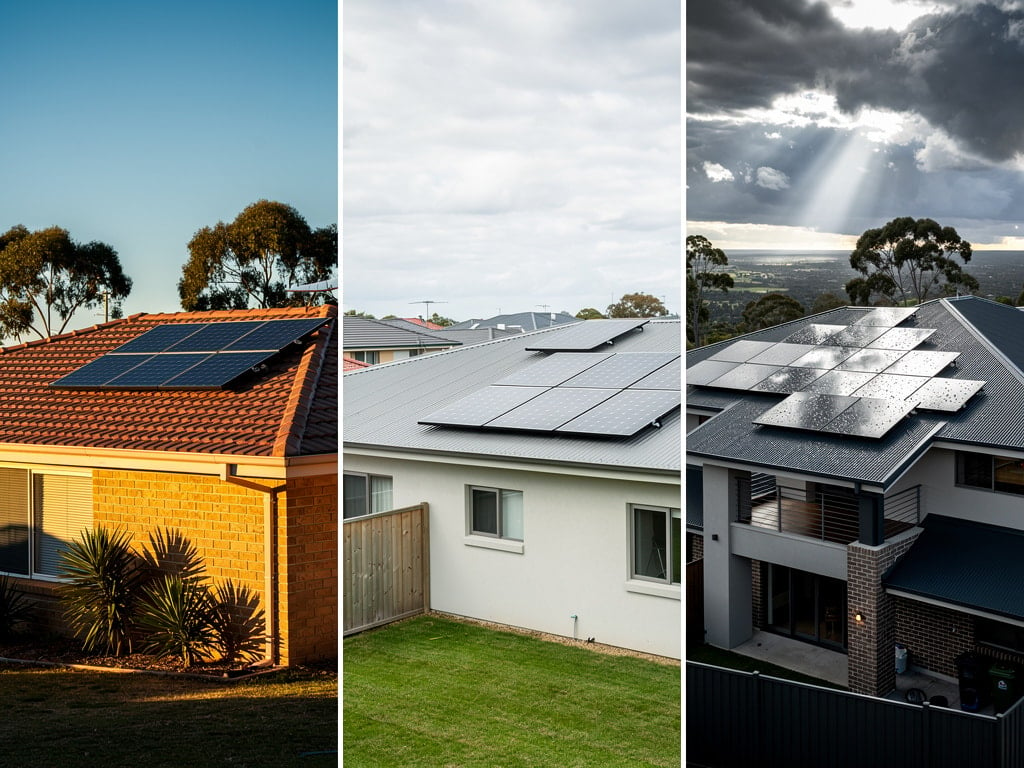
Solar power shouldn’t feel like a puzzle.
Yet too many people get turned off by conflicting advice, unclear rebate eligibility, and salesy gibberish.
The goal here is simple.
To make things easier for homeowners and small businesses who want clarity before committing.
When considering solar installation and rebates, it’s important to choose reputable solar companies and solar retailers.
As they play a key role in ensuring eligibility and a smooth process.
We’ll also help you understand the Clean Energy Council guidelines, the way STCs lower costs, and what each state and territory government offers on top of the federal solar panel rebate.
How the Federal Solar Panel Rebate Actually Works
Let’s cut to the chase.
The national solar rebate, known officially as the Small-Scale Renewable Energy Scheme (SRES), is an Australian Government program.
It’s based around tradable certificates called Small-scale Technology Certificates (STCs) when you install eligible solar PV systems or solar hot water systems.
Those certificates have value. The cleaner your system generates energy, the more STCs you receive.
Your installer then trades those certificates on your behalf to create an upfront discount on your system price.
Your solar retailer or installer will normally apply for the STCs and sell them on your behalf, so the rebate is not a direct cash payment.
- Your location (because how much sun your roof gets matters)
- The size of your system (larger systems attract higher rebates)
- The installation date (the rebate reduces slightly each year, and the installation date is important for calculating incentives, rebates, and compliance with program requirements)
That’s why a 6.6kW solar panel system in Brisbane could come out thousands cheaper than the same system in Hobart.
The federal government still supports this program, but it will phase down gradually each year until 2030.
So while there’s no need to panic, waiting too long can mean watching your rebate shrink.
Understanding State and Territory Solar Programs
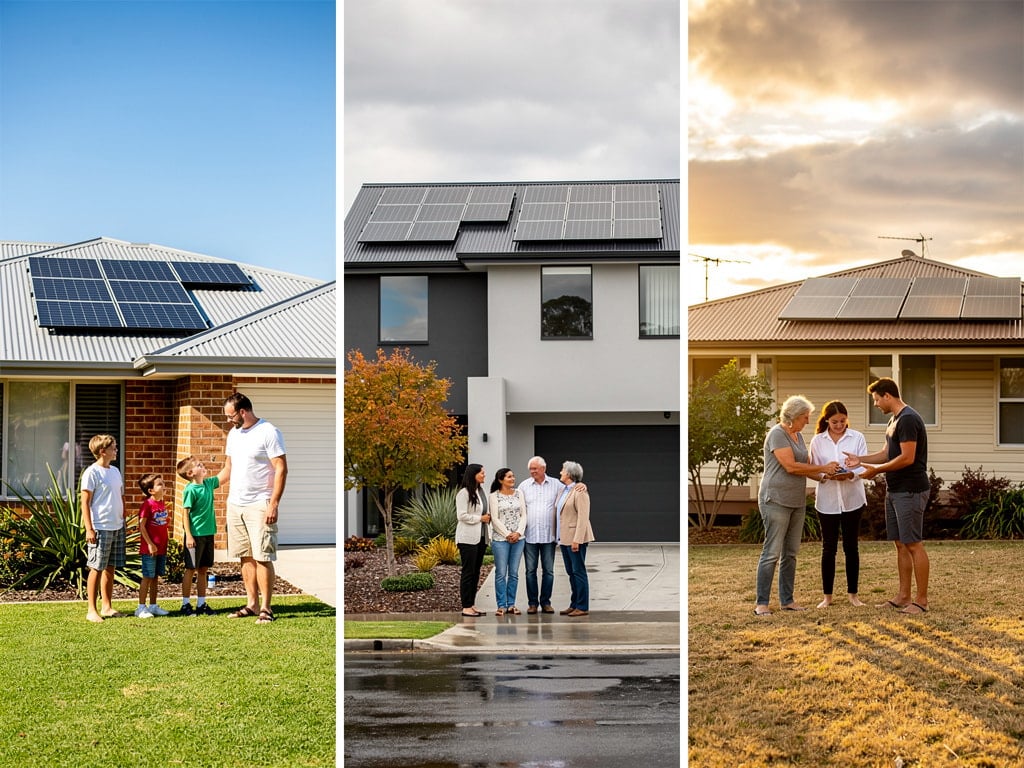
It’s not just Canberra waving the flag for solar.
Each state and territory government has its own way of giving Aussies a hand.
Various battery rebates are all being brought to the table in different states, presenting an opportunity for Aussies to save even more both short and long term.
Here’s a look around the country at who’s offering what.
Victoria: The Big Solar Enthusiast
If Victoria were a person, they’d be the mate who turns up early to help set up the gazebo.
The Solar Victoria program is one of the most generous in the country, offering up to $1,400 off eligible solar panel systems under the Solar Homes Program.
Victorians can also grab rebates for solar hot water systems plus low-interest loans to spread out the cost.
It’s a practical setup that’s made solar far more reachable for everyday households across the state.
And the best part?
You can check your eligibility online in a few minutes with no techno-waffle required.
South Australia: Battery Power and Sunshine Smarts
South Australia loves its sunshine almost as much as it loves smart tech.
Under the Cheaper Home Batteries Program, households can score a battery rebate worth up to $2,050 when they connect a solar battery to the Virtual Power Plant (VPP).
That’s a fancy name for a simple idea: your battery system links with others to share energy back into the grid when demand spikes.
In return, you get credits or lower bills.
There’s also an additional government discount of roughly 30% off the upfront cost of installing eligible small-scale batteries between 5 kWh and 100 kWh.
It’s an easy way to take your solar from “great” to “grid-independent”.
New South Wales: The Quiet Achiever
NSW doesn’t always make a fuss, but it’s quietly helping locals save too.
Through the Peak Demand Reduction Scheme, NSW households who join a Virtual Power Plant program can access up to $1,100 in rebates on a new battery system.
The state also supports low or interest-free loans for solar and battery installations, helping to ease the upfront hit.
So even though the Sydney sun might be doing its best to melt the steering wheel, it’s also trimming power bills for smart households using it wisely.
Queensland and Western Australia: Playing the Long Game
Queensland and WA are taking a slightly different track. Instead of direct rebates, they’re focusing on strong feed-in tariffs, affordable installations, and energy efficiency initiatives that make solar pay off over time.
The idea?
Let the sunny states use their biggest natural asset of endless blue skies and turn it into simple, ongoing savings.
For plenty of households, the numbers still stack up nicely, especially with the federal solar rebate taken into account.
Community Solar and Local Council Programs
If you’re in an apartment or a rental and thinking, “Cool story, but I don’t even have a roof,” then don’t stress.
There’s still something on the table.
The Community Solar Banks Program supports the installation of shared solar systems for multi-unit dwellings and apartment buildings.
Think of it like splitting a solar system with your neighbours, but without fighting over who waters the plants.
On top of that, some local councils run their own community energy or sustainability grant programs that can be combined with federal and state incentives.
If you’ve got the patience to check your council’s website once in a while, you might just stumble on an extra helping of savings.
Bigger Picture: Why Batteries Are Becoming the Next Step
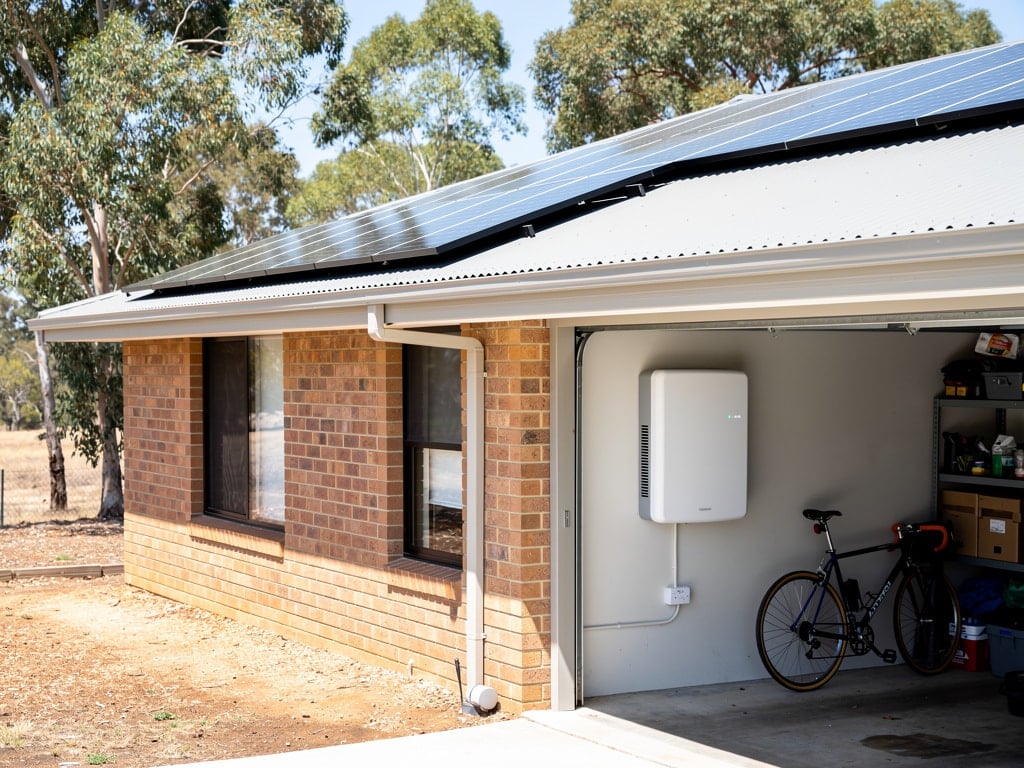
If solar panels are the heart of your system, solar batteries are like a set of strong arms holding the power for later.
While batteries were once pricey, battery rebates and falling market prices have made them far more achievable. The trick is finding out whether the numbers add up for your situation.
A battery system means you can store your excess solar energy instead of handing it to electricity retailers for a few cents and buying it back at three times the rate.
It’s one of the best ways to significantly reduce your reliance on the grid and future-proof your energy setup.
Why ‘No Jargon’ Matters
Most Australians aren’t electricians or engineers, and you shouldn’t need to be to understand your own roof.
We explain solar in plain language so you can make confident choices.
You’ll know how anticipated energy production affects your savings, what the rebate amount means,
and how to choose an accredited installer.
We won’t tell you solar suits everyone, because it doesn’t.
If your home gets a lot of shade or your energy use is low, it might not stack up.
But if your bills are creeping higher, there’s a strong chance solar will ease that pain fast.
What You Can Expect to Save on Electricity Bills

Getting solar is like planting a money tree that actually grows slowly, but surely.
Once installed, most quality solar systems pay for themselves within two to five years.
After that, those bill savings are yours to keep.
Even smaller systems can cut hundreds off your power bill every quarter.
And because your system keeps producing clean energy for 25 years or more, every sunny day becomes another tick in your favour.
What Australians Are Saying
“Solar’s getting fitted next week. No stress, easy process, and fingers crossed for smaller bills.”
Jake P – Ballarat, VIC
“Such a smooth process. Can’t wait to see the next bill. Hoping the battery helps cut it down even more.”
Lisa M – Toowoomba, QLD
“Too much dodgy info online. I just wanted straight answers, not a sales pitch. Thanks for keeping it simple.”
Luke S – Sydney, NSW
Thousands of Australians have now taken advantage of solar rebates, STCs, and battery programs, often trimming their total cost before a single panel even hits the roof.
A Straightforward Path to Solar
If you’re still sitting on the fence, start small.
Solar Incentives can help you check what federal incentives or state rebate programs apply to your postcode.
You don’t need to commit straight away and you don’t need to deal with questionable sales people that may not have your best interests at heart.
Just get clear, reliable information based on your household.
When you’re ready, you can make a decision that feels right, not rushed.
Because knowing how much help the government is offering before you spend a cent isn’t just smart. It’s common sense.
Ready to see what solar rebates you qualify for?
To start the ball rolling takes just 30 seconds.
No pressure. No calls. Just quick, clear answers.
FAQs
How much does the solar rebate reduce the cost of a solar system?
It depends on the size of your system, your location, the number of Small-scale Technology Certificates (STCs) you qualify for, and the current STC price at the time of installation.
The federal solar panel rebate is part of the Small-scale Renewable Energy Scheme (SRES) designed to reduce the upfront cost of solar panels.
For a new solar panel system installed in 2026, the solar rebate can often knock $2,000–$4,000 off the total price upfront. The value of the rebate varies based on your system size and the current STC price.
Installers typically handle the STC process and apply the rebate directly to the purchase price, so you don’t have to claim it later.
Solar feed-in tariffs are separate from solar rebates and provide payments for surplus energy exported back to the grid.
Do I still get a solar rebate if I add batteries later on?
Yes, but it works differently. The national STC scheme only applies to your original solar PV installation, not the battery you add later.
However, several state and territory governments offer separate battery rebates, such as the programs in South Australia and Victoria.
In some cases, you can also take part in a Virtual Power Plant (VPP) to earn credits for sharing stored power.
Who makes sure my system qualifies for rebates?
Your accredited installer, registered with the Clean Energy Council, is responsible for making sure your system meets all eligibility criteria for rebates and compliance with the Clean Energy Regulator.
Always check your installer’s accreditation before signing off as it’s your easiest way to stay eligible and get the most from your solar system.
Most home and business rooftop solar systems in Australia qualify for STCs.
When does the solar rebate end in Australia?
The federal solar rebate (Small-scale Renewable Energy Scheme) is still running, but it’s being phased down gradually until 2030.
Each year, the number of Small-scale Technology Certificates (STCs) you can claim reduces slightly.
That means the earlier you install your solar system, the bigger the rebate you can receive.
Installing before the end of the calendar year often helps you lock in a higher rebate value.
How do I claim the solar rebate or STCs?
To be eligible for STCs, your system must be installed by a Solar Accreditation Australia accredited installer.
Your installer company will handle the solar panel rebate for you, automatically taking it off the purchase price of the system.
The value of STCs you receive is based on the estimated amount of electricity your solar system will generate until 2030.
Areas of Australia that receive more sunshine hours qualify for more STCs for the same size system.
Homeowners engaging in state-specific programs for solar installations may benefit from additional incentives that can be stacked with federal rebates.

Article By
Jerome Trimboli
Jerome has over 2 years of experience in the renewable energy sector. Australian born and raised, he takes pride in advancing sustainable energy solutions to benefit both the environment and local communities.
In his spare time, Jerome is often watching various sports religiously, such as Aussie rules, cricket, soccer and basketball. Jerome loves playing sports like tennis and golf, as well as travelling across the world to parts unknown.